
Getting Their Wings
Helping the monarch butterfly is more complicated than you think.

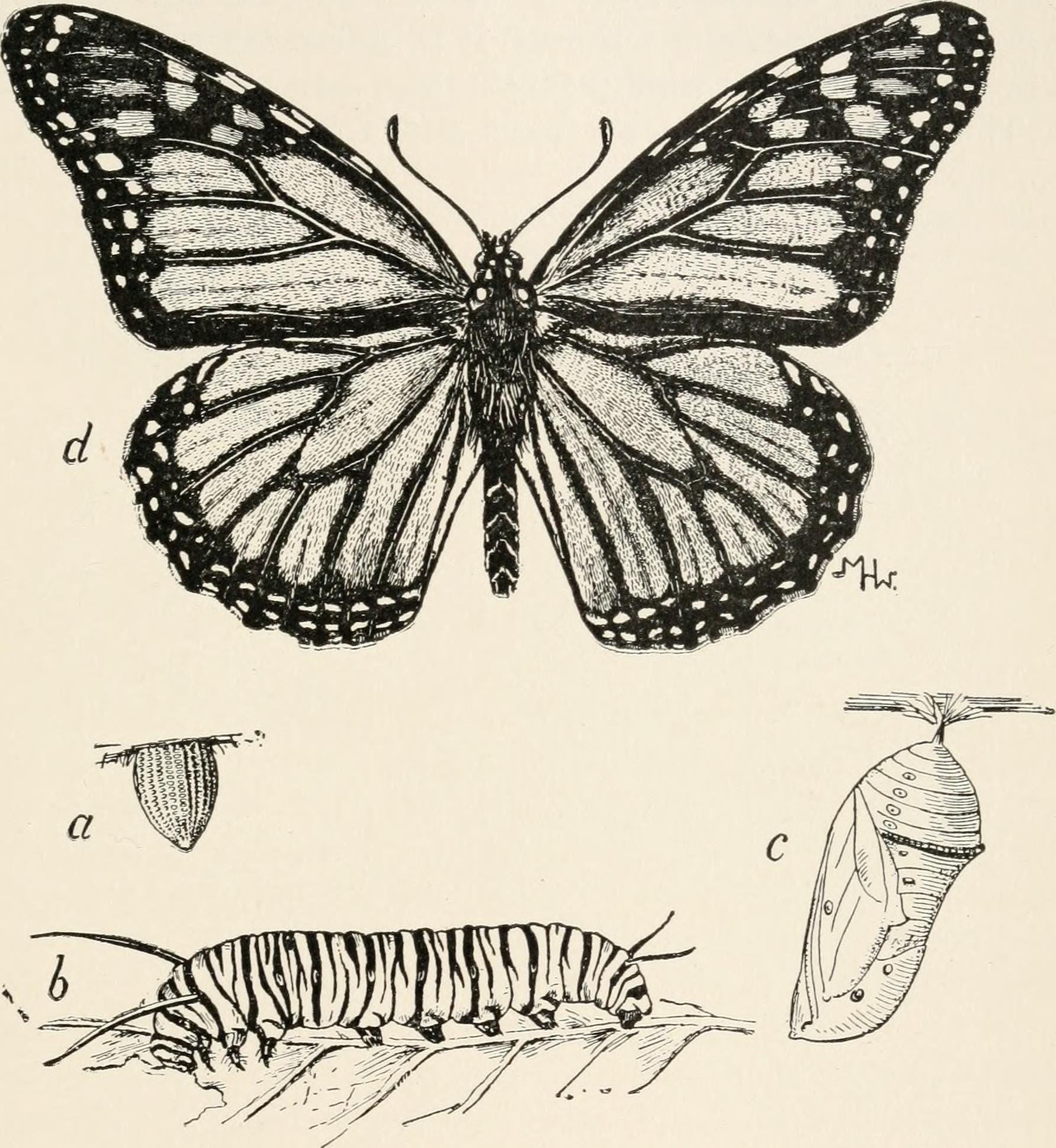
First published on July 18, 2023. I was reminded of this story this week when someone on a local Facebook gardening page asked how to save some Monarch eggs on a milkweed plant. (The stalk had been broken off.) —SKK
Getting Their Wings
Two years ago this month, I impulsively (as that's how I roll) decided to take over the rearing of a dozen monarch caterpillars.
The group email call-to-action happened on July 25. The sender, a school administrator whom I'd never met, was leaving on vacation in two days and looking for a caterpillar babysitter. Julie had been cultivating a patch of native milkweed in her front yard for years and had never seen a monarch there before. That year two butterflies had not only visited, but laid eggs. She'd gathered some “cats” both times so she could watch them go through their metamorphic cycle up close.
From Julie:
"You'll have to keep 'em in Milkweed… I have (two) mesh tents, about two feet high with a square bottom, about 16” to a side. I have them sitting outside under a covered porch so that the caterpillars don’t have to deal with direct sun or rain. I’ve weighed the tents down with some rocks because, of course, it’s Colorado and we get winds. In the tents, I keep the milkweed in slender vases with aluminum foil bunched at the top to keep the caterpillars from falling in and drowning… The “work” of it is just making sure they have enough milkweed to eat and cleaning out the bottom of the tent. I have a layer of foil and then a layer of paper towel and I just take out the paper towel. The whole thing probably takes me 5-10 minutes a day. I’ve seen milkweed in various places around town, so you might not have to come to my house for that, but you are welcome to if need be.
They’re caterpillars for 9-16 days and in their chrysalises for 10-14, so by the time I get back, they’ll probably be in the latter stage. You are welcome to keep everything as long as it takes! There’s lots of information available online, but you can also text me if you have questions. I should note that I’m not an expert—I’ve only just started this this summer (because I haven’t seen monarchs in years) but I did have success with four butterflies from an earlier visit this summer.”
I wrote back:
"Wow. I think I would like to do this, Julie. I've never done anything like this and I have milkweed plants available in my yard for their food!"
************
I'd never seen a monarch butterfly in my garden either, but the milkweed I'd been growing for several years had self-seeded, and the patch was getting bigger. I had around eight plants—not a lot, but plenty to feed a dozen caterpillars.
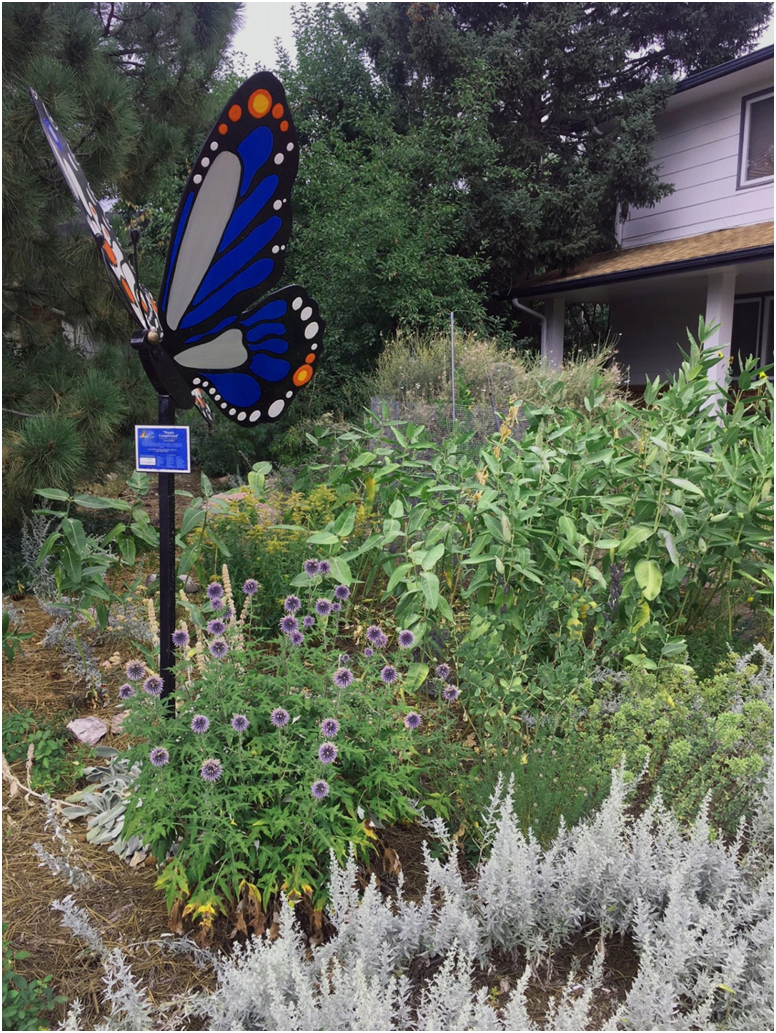
Julie and I agreed to meet up the next day. Her 1980s-era suburban home was located on a cul-de-sac graced with a big metal cut-out butterfly on a post in front. How fitting! The milkweed patch contained at least a hundred plants (only a few are visible in the photo). We kept our visit short, as Julie was packing for vacation.
Back at home, I thought about where to set up the experiment.
The small house we owned next door to our bungalow was a one-time Colorado Springs “fixer-upper” that we’d bought in 1990 and painstakingly fixed up for over 20 years. We had sold it that month, but it would still be empty for a few more weeks. The fenced-in patio would be a perfect place to raise the caterpillars. There they’d also be safe from our two recent additions to the family, our German shepherd-mix pups, Maia and Frances Bean—two sweet and rowdy girls who might cause damage from curiosity if they had the chance.
The glass bottle with milkweed stems and caterpillars was transported in a 15" x 15" x 24" cage like this one. The caterpillars ranged in size from a half-inch long to almost big enough to pupate. The first night the tent-cage sat on the dining room table out of Maia and Bean's reach.
The next day I set up the caterpillar nursery on an outside table under an umbrella. After finding a couple of bricks to weigh down the tent (Colorado winds can be extreme) and messing around with the glass bottle holding milkweed stalks covered with foil, I decided to buy a 10-piece plastic Floral Tubes with Rack Holder for Milkweed Cuttings. The tubes featured leak-proof tops with holes that made replacing the milkweed stalks easy. I also bought a small cage 12" x 12" x 12" (a Restcloud Insect and Butterfly Habitat Cage Terrarium Pop-up) for transporting the butterflies to a nectar-rich area once they emerged from the chrysalises.
I knew the chrysalis stage would happen soon, as some of them were getting big. Time to get educated. Over the next few days, I read some articles and watched a few videos on what to do when they got to their chrysalis stage. I learned that the other caterpillars might actually eat the chrysalises if they remained attached to the milkweed! Not happening under my watch.
I found this woman on YouTube pretty entertaining. (And I think we have the same carrion flower plant too, the cactus-type plant at the end of the video!) I didn't go with her pipe cleaner method, although it looks the easiest, as I didn't want to make a trip to a crafts store or buy more plastic-based products.
The second video showed a woman raising many monarchs indoors. Her method involved little pieces of cardboard and tape.
I was surprised (and somewhat embarrassed, as it put my project in a whole new light) to learn the many reasons why people should not raise monarch butterflies! Long story short, the negatives have to do with species survival: disease control, genetic strength (90% of monarchs in the wild don't make it to adulthood, while human-raised monarchs can easily have a 0% mortality rate), and forage and nectar availability. It defeats the purpose of helping if the butterflies you raise starve or can’t find a place to lay eggs, or if they get parasites. Please read more here.
I came away with the lesson that it’s far better to help by creating healthy habitats for monarchs.
The articles also said that it wasn’t such a bad thing to raise a few (10 or under) for educational purposes.
When writing this account of my experience I saw that the original video I watched (with the woman raising many monarchs) was now gone. I’m guessing she learned the error of her ways.
She had a good method for moving chrysalises, though, and I found it here, from another YouTuber. The cardboard/tape method would be easy enough, and I had all the things I needed: cardboard, tape, tweezers, and paperclips to make hanging loops. I did not use pointed tweezers, however. It made me nervous watching the woman on the film using them!
The process of moving chrysalises is easy, but nerve-wracking for newbies. I white-knuckled it through the first few I handled. After that, I became comfortable, as I saw the silk is incredibly strong and sticky and easy to manage if you're careful. After I'd moved a few of the beautiful green chrysalises, it even became fun.
And I did have to move all but one, as the caterpillars seemed to prefer to become chrysalises on the undersides of leaves. The one outlier made his/hers on the side of the enclosure, attaching it to the clear plastic. I was a little worried about that, but I left it there, and it was fine.
It took me about ten minutes a day to clean the tent and prepare fresh food each day. I would oh-so-carefully move the milkweed (caterpillars attached) out of the tent first and replace the milkweed that did not have caterpillars attached. Then I'd replace the paper towels at the bottom of the tent (always amazed by how much caterpillars poop!) and finally oh-so-carefully move everything back. One caterpillar died when I either accidentally squished it on the second day or it just fell and sort of…ruptured…on the gravel below. I’m not sure exactly what happened, but I felt terrible. All the others survived.
By August 3, I was in the middle of the experiment. I had seven chrysalises and a few caterpillars still growing.
By this time I realized I’d been cutting far too many milkweed branches, but that was okay. I wanted them to have nice, fresh milkweed every day, and they had a bounty.
On the morning of August 11, the first two emerged (proper term, I've read, is eclosed). I had since moved them all to the front porch of our home.
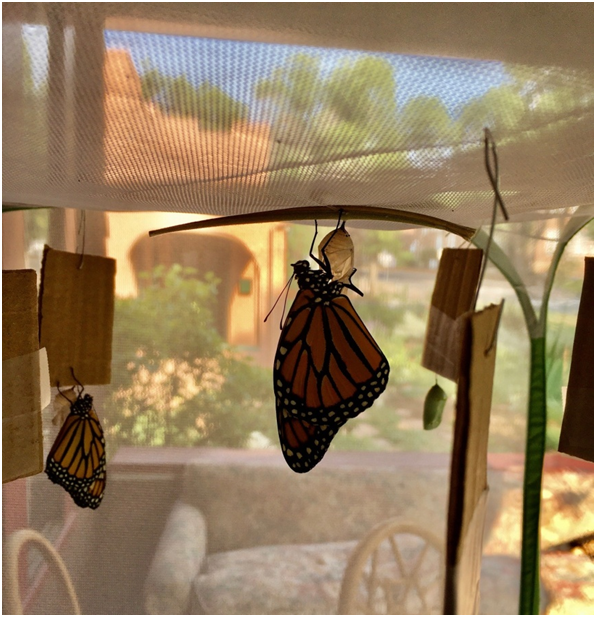
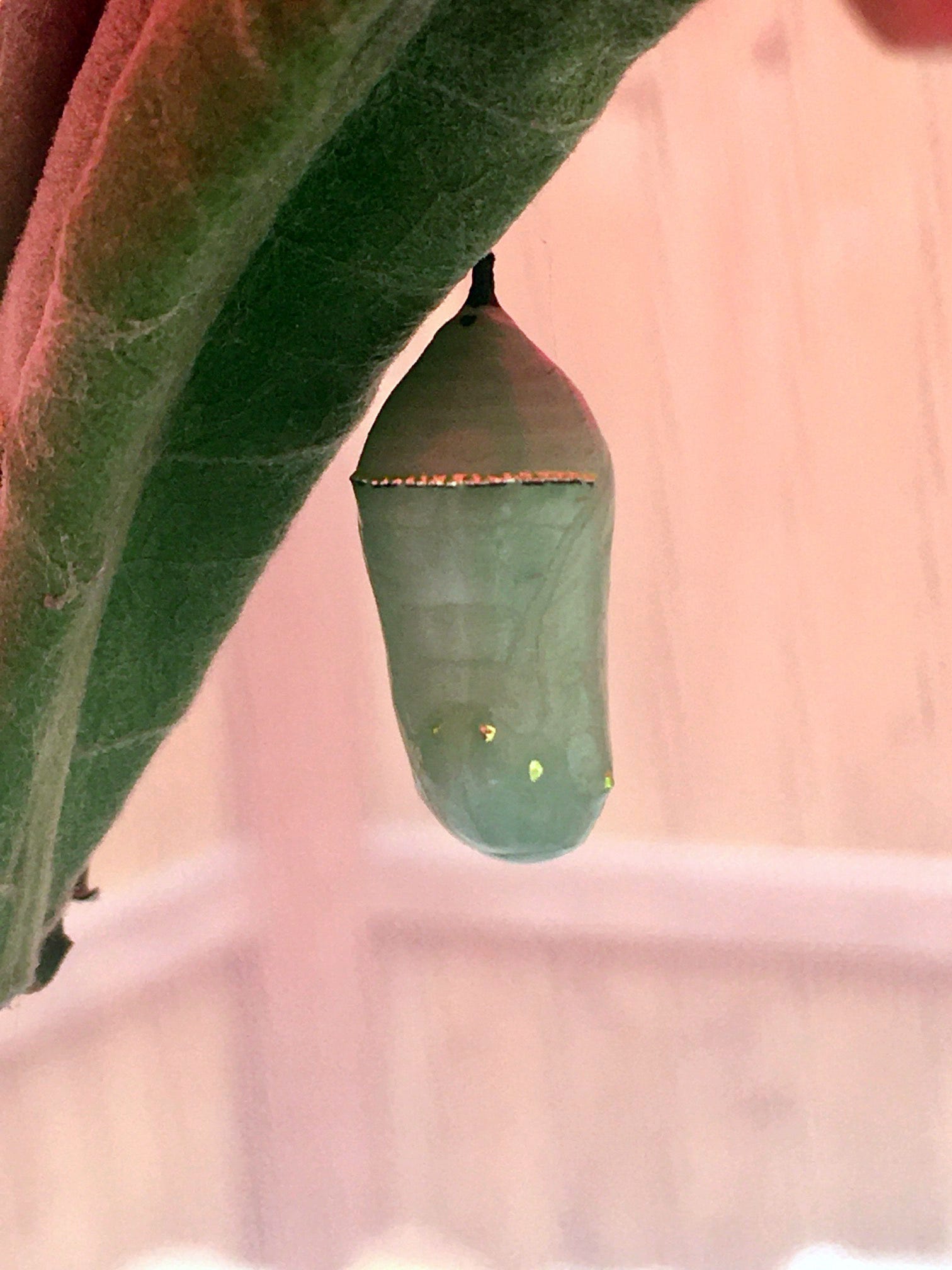
One of the most wonderful things about this experience was just looking at the gorgeous chrysalises! I didn’t know they looked like they were made of the most beautiful and delicate green glass decorated with gold. (The photo doesn’t do it justice; they are shiny and glass-like.) I was so surprised by the beauty that I thought surely there must be Art Nouveau-era jewelry or decorative items based on their design. I couldn’t find any from the last century, but I found this modern pendant on Etsy, made by a New Zealand artist. I bought one as a memento not only of this experiment, but as a symbol of the life transformations we’re all capable of.
This is the best video I’ve seen on the physical transformations of caterpillar to chrysalis and chrysalis to butterfly. It's mind-blowing to watch the caterpillar shed its skin and turn into a chrysalis! (Around the 7:00 mark.) This last week, I’ve learned things I wish I would have known when I undertook this experiment (but hey, I had other things going on…and, as you know, it was a spur-of-the-moment thing!) The video also shows how to tell a male from female in the chrysalis stage. You can learn how to tell male from female in the butterfly stage here.
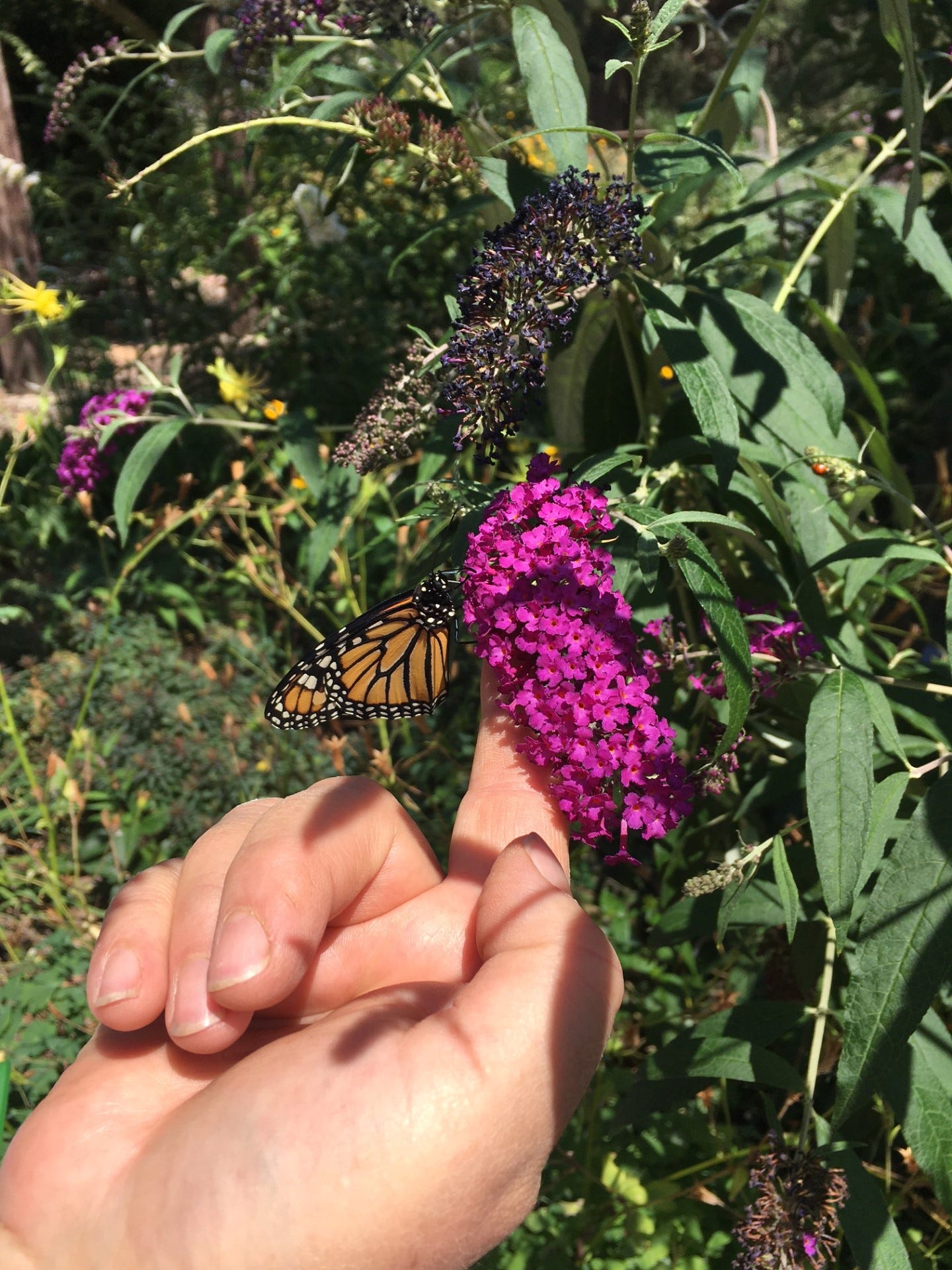
I took the butterflies to the Horticultural Arts Society’s butterfly garden in nearby Monument Valley Park (Colorado Springs) the same day they emerged. There they’d find plenty of nectar. I saw other butterflies there, including a yellow swallowtail.
From there it was a daily occurrence, greeting one or two new butterflies each day.
August 12 – one emerged.
August 13 – one emerged.
At the butterfly garden I saw a girl of about 12 years old with her mother. I asked if the girl would like to release a butterfly. She was thrilled. It made my day that we (the butterfly and I and my daughter Lily, who was there, too) added something special to their mom-and-daughter outing.
August 14 – two emerged.
August 15 – one emerged.
August 16 – one emerged.
August 17 – two emerged.
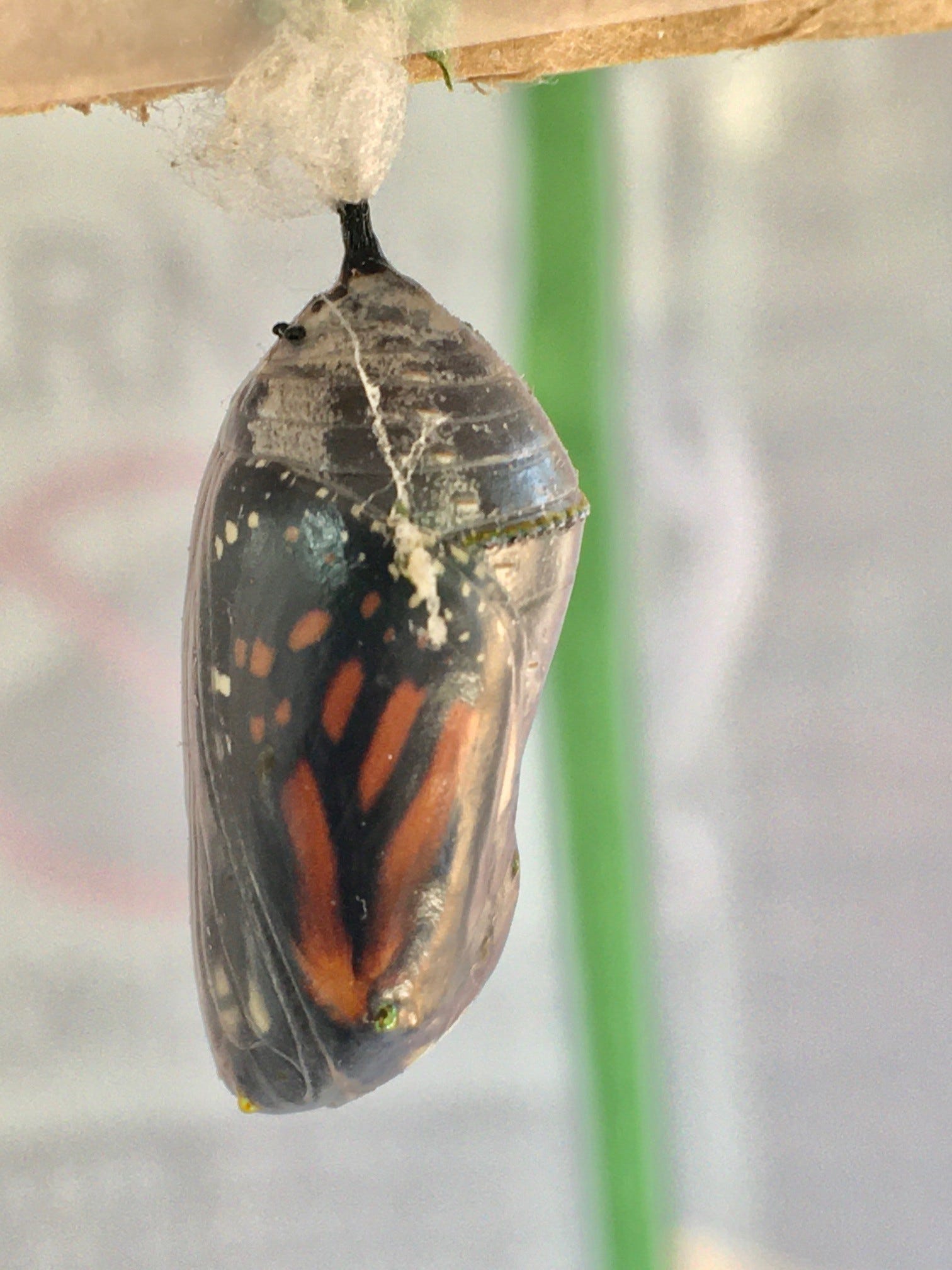
Almost ready to fly! The chrysalis becomes transparent as the time to eclose draws near.
On August 18, there was one last chrysalis. I emailed Lisa Lister, a new friend/ artist/former librarian who is re-wilding her backyard (you can read about her here) and asked if she’d like to experience the eclose of the last one. "YES." she wrote back. It happened the next morning. Lisa said the 11th butterfly was female.
A wonderful time lapse video of a monarch butterfly eclosing, filmed by Neil Bromhall, to the tune of Mozart’s Eine Kleine Nachtmusik.
The butterflies had flown! While I learned that it’s ethically questionable to make a hobby out of raising butterflies, I would highly recommend trying it once…or even twice, especially if you have kids.
In so many ways 2021 felt like a milder version of 2020. A time of continued trauma, and, yet, at the same time, I was beginning to see the bigger picture—struggle and change as a catalyst for great transformation. In 2023*, I’m now certain we’re in a time where we can learn how to heal old wounds, make new plans, and just maybe, like the butterfly, begin to transform into something beautiful. Something with the power to soar.
(*And, as I republish this in 2026, this remains true, as it always does!)
Note: Links to various products are not affiliate links.
The reason for my public speaking maiden voyage (at age 63): this amazing book on George Washington Carver!
Available as a print, e-book, and audiobook through Amazon.

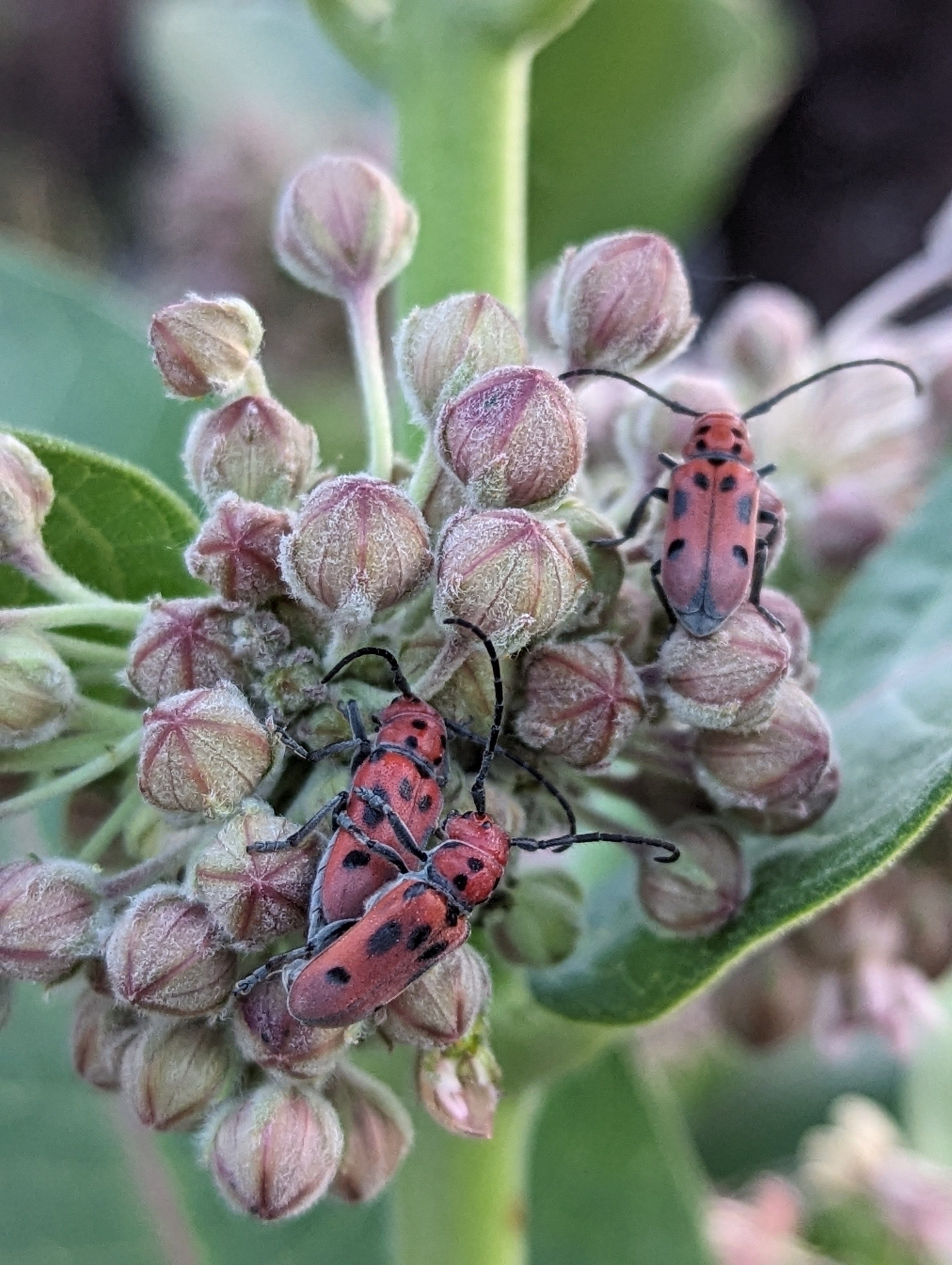
Great story and really amazing photographs. So those red and black beetles are milkweed beetles!
What a great memory to have! 🦋